


Fire Networks
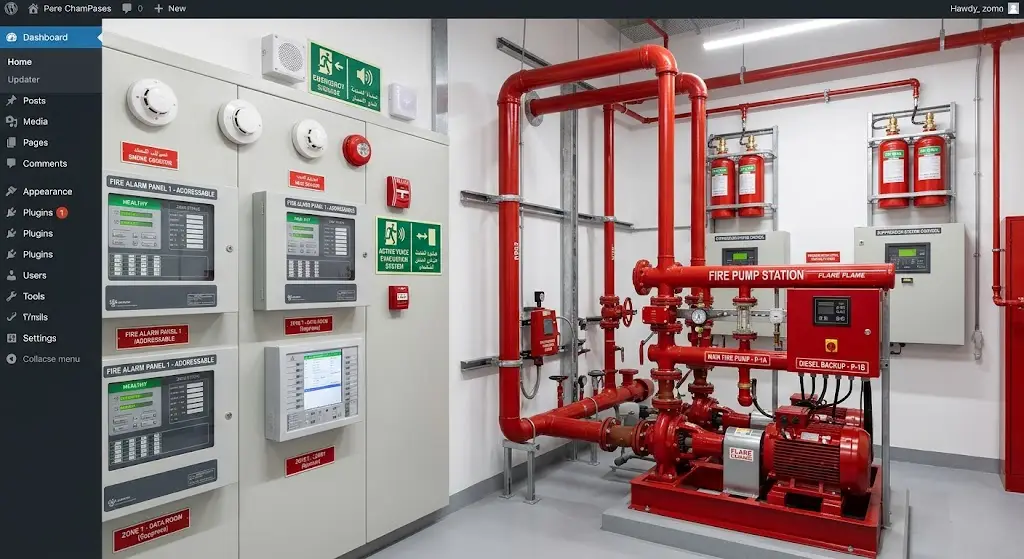
Protection, Suppression, and Safety Systems
Modern commercial and industrial facilities require robust, integrated fire protection infrastructure to safeguard occupants, assets, and operational continuity. A comprehensive Fire Network encompasses various synchronized subsystems designed for early detection, rapid suppression, and reliable containment of fire hazards. This guide explores the core components of modern fire networks, including firefighting infrastructure, fire alarm systems, specialized suppression agents like FM-200, portable extinguishers, and high-capacity hydrant systems.
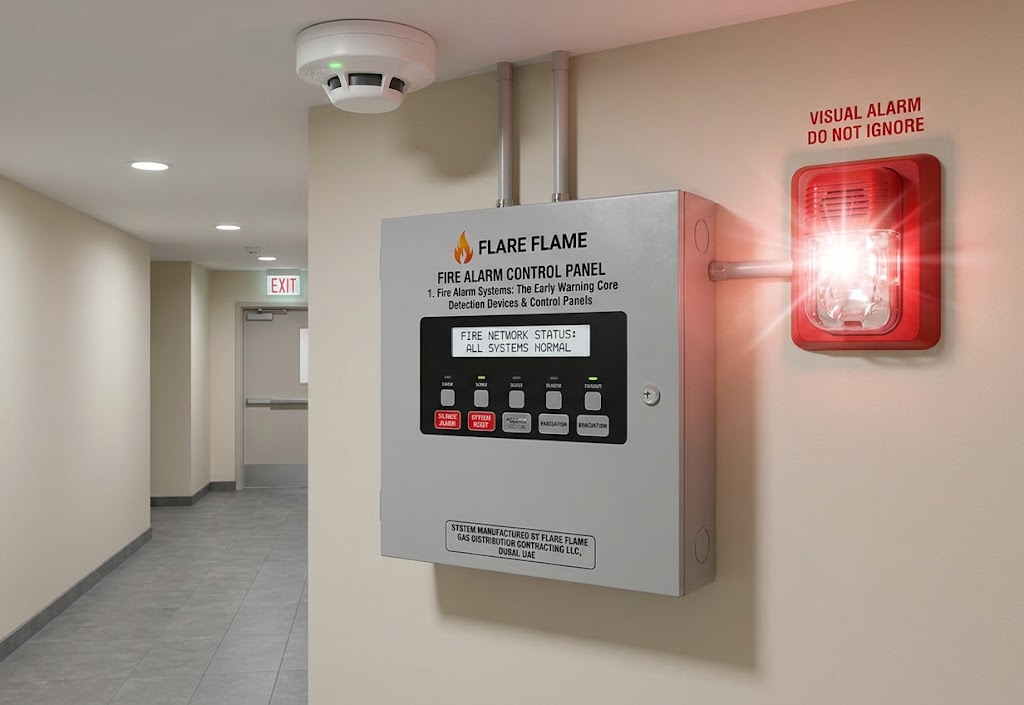
1. Fire Alarm Systems: The Early Warning Core
The fire alarm system serves as the central nervous system of any facility’s safety infrastructure. It continuously monitors environmental changes associated with fire to provide immediate notification.
- Detection Devices: Includes smoke detectors (optical and ionization), heat detectors (rate-of-rise and fixed temperature), and multi-criteria sensors designed to minimize false alarms while ensuring rapid detection.
- Manual Call Points (Break Glass Units): Strategically positioned along exit routes to allow occupants to manually trigger the alarm in an emergency.
- Notification Appliances: High-decibel sounders, horns, strobe lights, and voice evacuation systems designed to alert occupants and guide safe evacuation.
- Control Panels: The central processing hub that receives signals from detectors, evaluates the data, initiates alarms, and interfaces with auxiliary systems such as elevators, ventilation shutdown, and access control.
2. Fire Fighting and Hydrant Systems
Water remains the primary extinguishing medium for large-scale structural fires. High-capacity water networks ensure a dependable and continuous supply for both manual intervention and automated suppression.
| Component | Primary Function | Key Characteristics |
| Fire Hydrant Systems | Provides high-volume water access for Civil Defense and internal fire teams. |  |
| Fire Hose Reels | Enables first-response firefighting by building occupants before professional help arrives. | 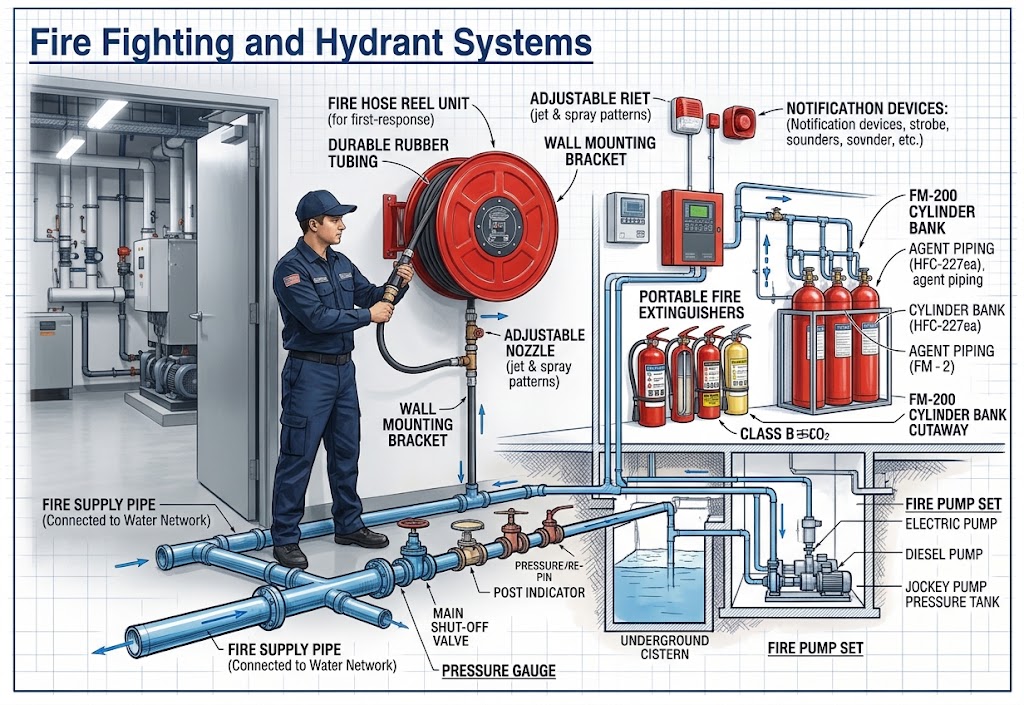 |
| Fire Pump Sets | Maintains adequate water pressure throughout the entire network. | 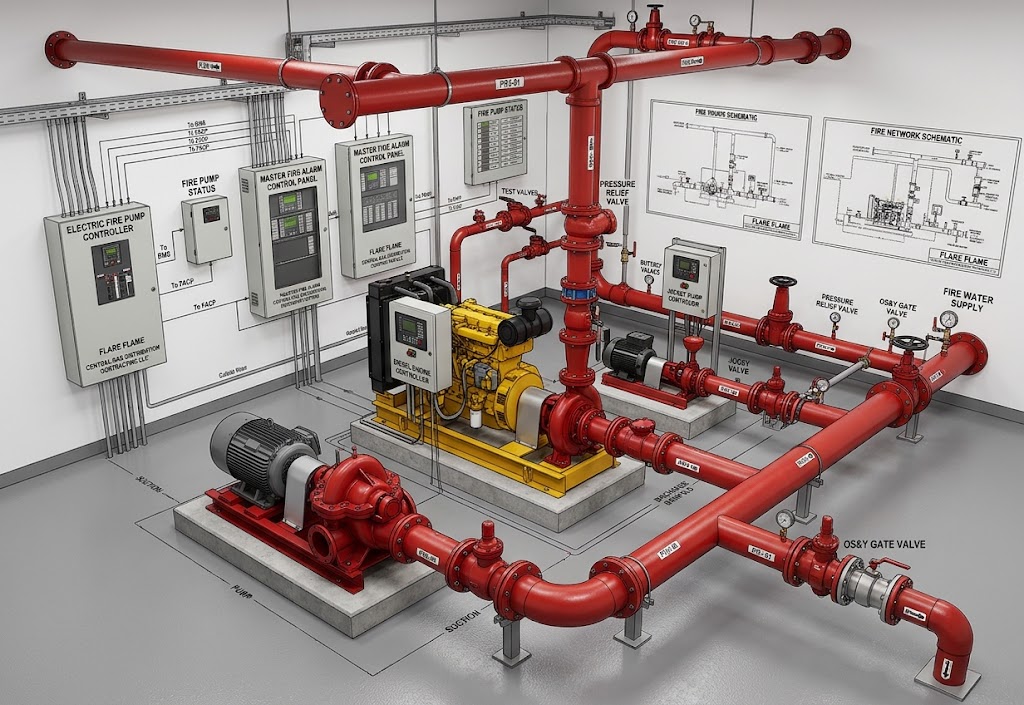 |
3. Gaseous Fire Suppression and FM-200 Systems
Water-based systems can cause catastrophic damage to sensitive electronic equipment, archives, and high-value data centers. For these critical environments, clean agent gaseous suppression systems are utilized.
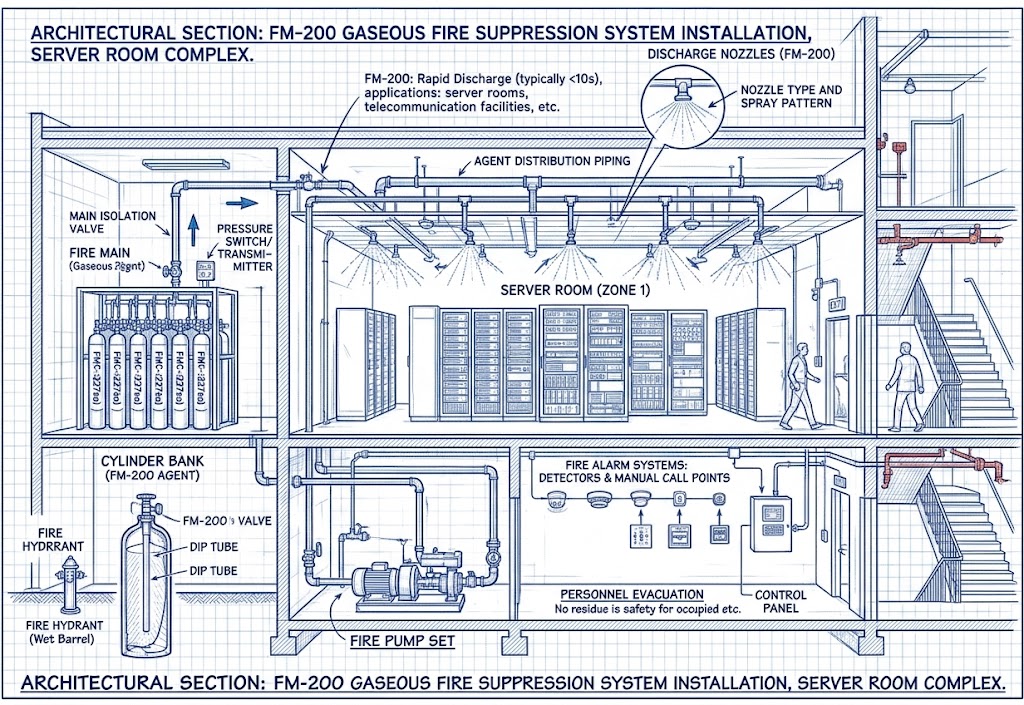
- FM-200 (HFC-227ea): A colourless, odourless gas that discharges rapidly (typically within 10 seconds) to extinguish fires primarily by heat absorption rather than oxygen depletion.
- Safety for Personnel: FM-200 is safe for occupied spaces at designed concentrations, leaving no residue behind and requiring no post-fire cleanup or drying.
- Applications: Ideal for server rooms, telecommunication facilities, control rooms, museums, medical archives, and electrical switch gear rooms.
4. Portable Fire Extinguishers
Portable extinguishers are the first line of defense against incipient-stage fires. Selecting the correct class of extinguisher is vital to prevent exacerbating the hazard
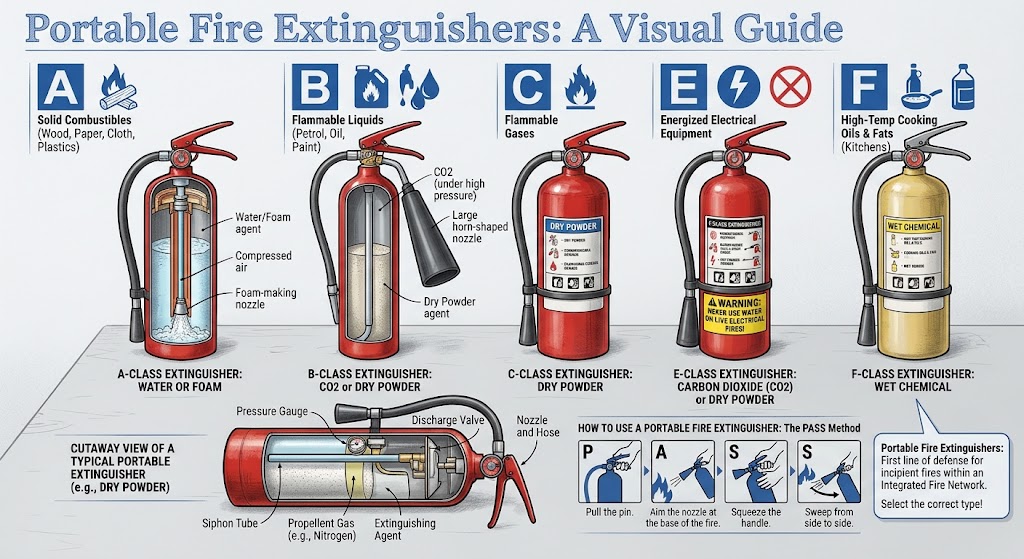
- Class A: Suitable for solid combustibles like wood, paper, cloth, and plastics (typically Water or Foam extinguishers).
- Class B: Designed for flammable liquids such as petrol, oil, and paints (CO2 or Dry Powder extinguishers).
- Class C: Rated for flammable gases (Dry Powder).
- Class E / Electrical: Safe for energized electrical equipment (Carbon Dioxide or Dry Powder; never use water on live electrical fires).
- Class F: Specialized for high-temperature cooking oils and fats found in commercial kitchens (Wet Chemical extinguishers).
Conclusion
An integrated fire network is more than a regulatory requirement—it is a critical investment in life safety and asset protection. By harmonizing early detection systems, portable extinguishers, reliable water hydrant infrastructure, and specialized clean-agent suppression like FM-200, facilities achieve comprehensive resilience against fire emergencies.
STAY IN TOUCH
Leave a Reply